

Sign up to receive alerts when energy demand is highest!
Beat the Peak
Beat the Peak is a voluntary program that helps customers reduce energy use during “peak events”, which are the times when demand for electricity and/or natural gas is highest. During these events, energy costs more, and the power plants brought online to meet demand tend to produce higher carbon emissions.
Electric Peaks
Electric peaks occur during specific hours each month when electricity demand is highest. To meet that demand, additional often dirtier power plants must come online, and HG&E incurs significant extra charges based on how much demand occurs during the peak. Electric peaks are short, typically lasting just a few hours on a weekday evening. Click here to learn more about peak electric demand events.
Natural Gas Peaks
Natural gas peaks occur on cold winter days, when demand for natural gas, and its cost, is highest. Unlike electric peaks, gas peaks last a full 24 hours (10 a.m. to 10 a.m.), and during an extreme cold snap, peak conditions can stretch across multiple consecutive days.
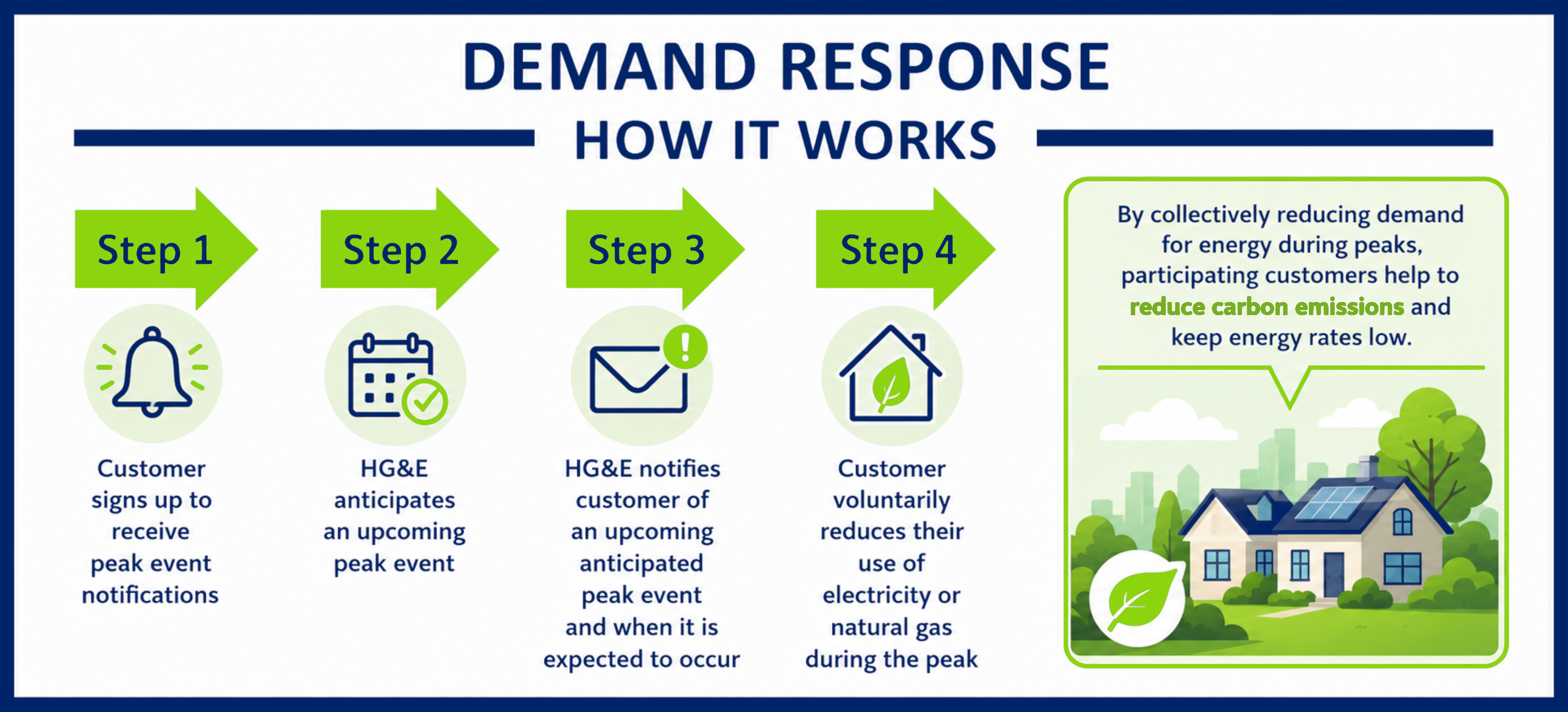
Our voluntary demand response program lets you sign up for advance notice of upcoming predicted electric and/or natural gas peak events, so you can reduce your energy use during those windows, at your discretion and to your personal comfort level. You’ll save energy and money on your bill, help keep costs down for all HG&E customers, and help reduce our collective carbon footprint.
Sign Up:
More Information
Many peak-reduction actions work for both electric and natural gas equipment. Use the guide below based on your home's setup:
|
Action |
For Electric Equipment |
For Natural Gas Equipment |
|
Heating & Cooling |
Air Conditioners: In the summer, reduce air conditioner use by raising thermostat temperature 2–4° or turn off A/C and use fans.*
Electric Space Heating Systems: In the winter, reduce electric heating use by lowering thermostat 2–4° on cold days.* |
Gas Space Heating Systems: In the winter, reduce gas heating use by lowering thermostat 2–4° on cold days.* |
|
Water Heater |
If you have an electric water heater: Take shorter showers; delay running dishwasher & washing machine. |
If you have a gas water heater: Take shorter showers; delay running dishwasher & washing machine. |
|
Stove / Cooking (A microwave uses significantly less energy than either a gas or electric oven!) |
If you have an electric oven: Grill outside or use the microwave instead. |
If you have a gas oven: Grill outside or use the microwave instead. |
*We never ask customers to adjust temperature setpoints to a level that compromises personal comfort, safety, health, or property. Only participate within a temperature range that’s comfortable and safe for your household.
- Cut "Vampire Load": Unplug unused electronics, chargers, coffee makers, computers, and smart TVs (which draw power even when turned off).
- Hold Off on EV Charging: Avoid charging electric vehicles during peak alert hours.
- Turn Off Lights: Switch off unnecessary indoor and outdoor lighting.
Electric peaks:
Expect 2–3 notifications a month on average (occasionally up to 5). Electric peaks typically occur on weekday evenings between 4–8 p.m. You’ll get a notification the morning of an anticipated peak, letting you know the hours it’s expected to occur.Gas peaks:
If you opt to receive gas peak notifications, you’ll be notified the day before an anticipated peak, asking you to reduce your gas use for the following 24-hour period (10 a.m. to 10 a.m.). Because gas peaks span a longer window than electric peaks, expect 5–10 notifications over the winter, since they typically occur when the average daily temperature drops to 10 degrees or below.When you sign up, choose to be notified by email, text message, or both.
Connected Homes Smart Device Monthly Incentives
Receive a $5-$8/month incentive for allowing HG&E to remotely adjust the temperature of your smart thermostat, water heater or heat pump controller a few times each month.
Electric Vehicle Charger Program
Receive an on-going $10/month bill credit & free level 2 charger (or $450 bill credit for an existing charger) in exchange for charging only between the hours of 9 pm - 7 am on weekdays (and anytime on weekends).