


Mini-Split & Air Source Heat Pump Education
What is a Heat Pump, and How Does it Work?
Heat pumps and mini-splits are highly efficient electric heating and cooling systems. With HG&E's low electric rates, they can have the lowest annual heating costs of any heating system type in Holyoke.
A heat pump system has two main components: an outdoor unit and one or more indoor units. Refrigerant cycles between them, carrying heat — similar to how a refrigerator works, but in reverse when needed.
- Summer: Heat is moved from inside your home to outside.
- Winter: The system reverses, extracting heat from outdoor air and transferring it inside.

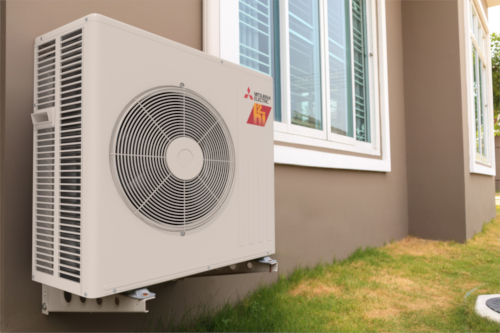
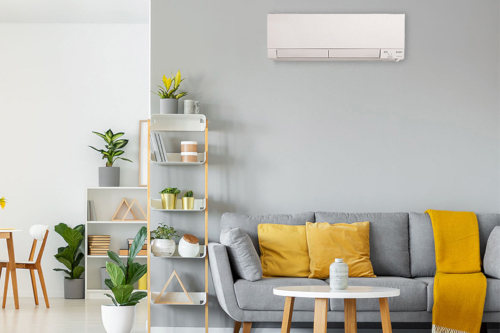
Heating and cooling in one system: A single heat pump handles both your heating and cooling needs, eliminating the need for separate systems.
Exceptional energy efficiency: Heat pumps don't generate heat — they move it — making them far more efficient than conventional heating systems. Many models achieve an average heating efficiency of up to 300% throughout the heating season, meaning they deliver about 3 BTUs of heat for every 1 BTU of electricity consumed.
Low carbon emissions: Because heat pumps run on electricity rather than fossil fuels, they produce significantly lower carbon emissions — and for HG&E customers, that benefit is even greater thanks to HG&E's large share of carbon-free electricity.
Zone control with mini-splits: Ductless mini-split systems allow you to heat and cool individual rooms independently, so you're not wasting energy conditioning spaces you're not using.
Yes — many heat pump models available on the market today can continue to provide adequate heat throughout the entire winter in Holyoke if they are sized correctly via a Manual J. Look for models on NEEP's Verified Cold-Climate Heat Pump List, which operate at ≥175% efficiency when it is 5°F outside!
Holyoke falls below 5°F for only about 44 hours per year, with a recorded low of -8.2°F. Look for a system rated down to at least -9°F to ensure year-round coverage.
Air-sealing and insulating your home before heat pump installation can:
- Reduce your annual heating and cooling costs
- Allow you to buy a smaller (less expensive) heat pump system
HG&E offers free home energy audits that identify cost-effective weatherization improvements. Holyoke also has weatherization incentives to help cover the costs.
Heating Cost Comparison
Annual heating costs depend on several factors — your system's efficiency, how efficiently heat is distributed through your home, current fuel rates, etc. The comparisons in this section estimate annual and long-term costs for a typical home using a heat pump versus other common fuels and systems, based on HG&E's current rates.
Please note: These estimates assume the ducted heat pump and ductless mini-split have no electric resistance (strip heat) elements. Adding strip heat can raise annual heating costs, though it may lower the system's installation cost.
Want a comparison tailored to your home?
- Free Home Energy Audit — A professional energy advisor will assess your home and identify ways to save on your energy bills. Mention you're interested in heat pumps, and the auditor can estimate your potential heating cost savings based on your current system's efficiency and fuel type — a good starting point whether you're considering a whole-home heat pump or a smaller system for the rooms you use most. Schedule at no cost through our partner NextZero: 1-888-333-7525 (they'll coordinate with our audit partner, the Center for EcoTechnology). Learn more and see a sample report →
- Heating Cost Comparison Tool — Download our free Excel calculator to adjust system efficiency, fuel rates, and other factors yourself. Download the tool →
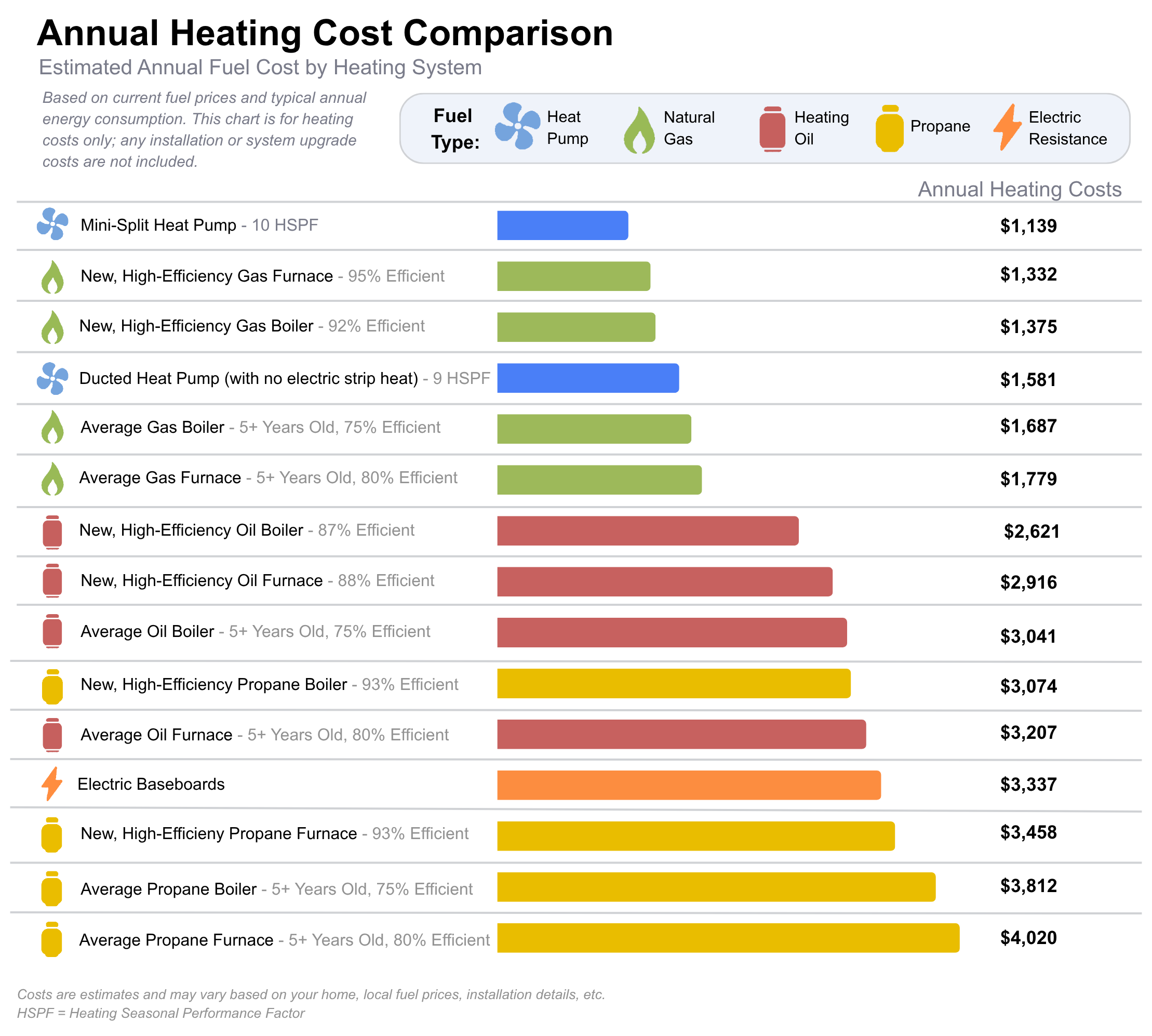
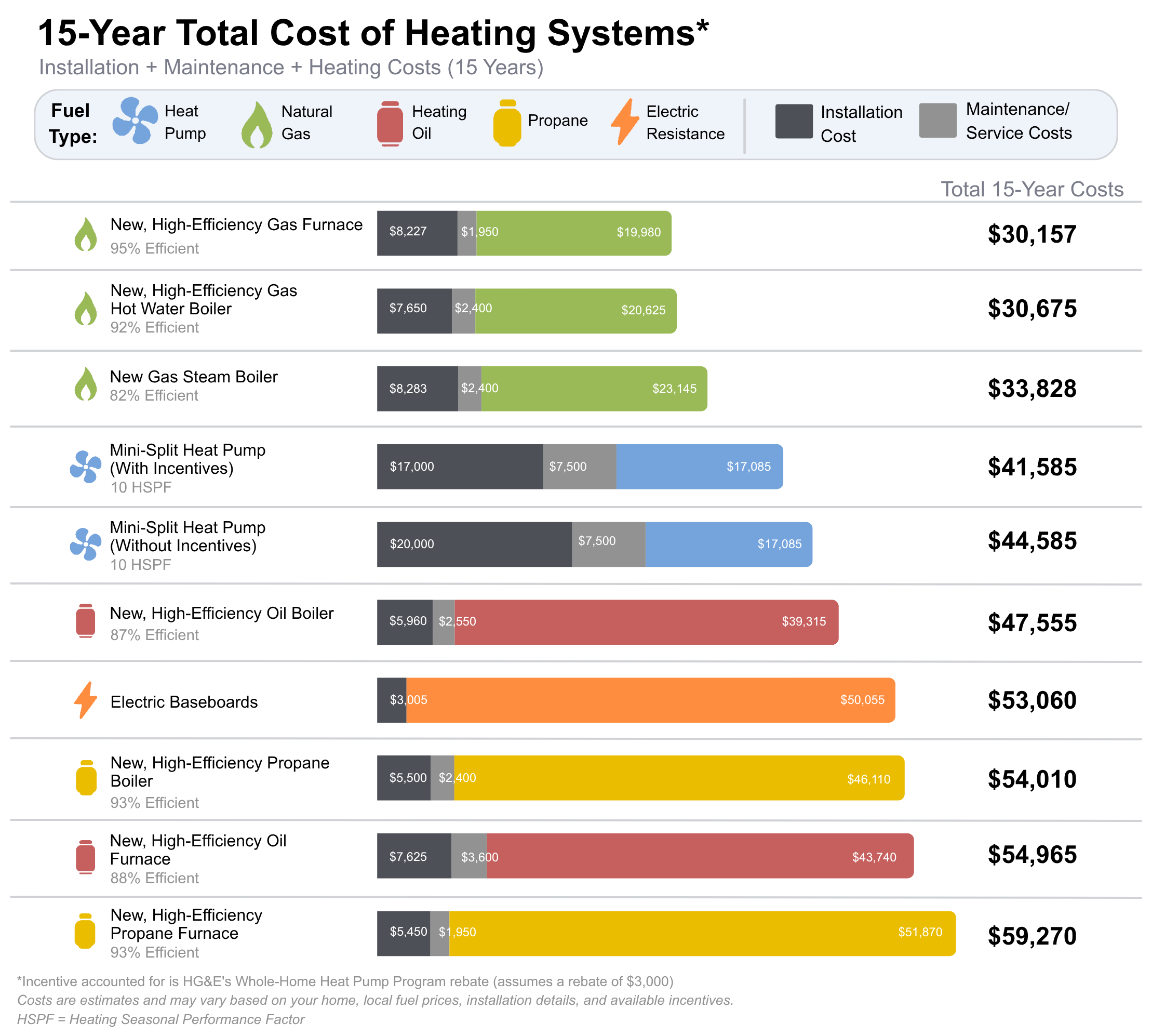
• It is assumed that the Ductless Mini-Split Heat Pump and the Ducted Heat Pump have no electric strip heat or electric resistance elements as part of the system. Installing electric resistance elements can increase annual heating costs.
• Electric rate based on HG&E's average residential electric rate as of September 2026 of $0.165/kWh
• Natural Gas rate based on HG&E's average 2025/26 winter residential natural gas rate ($1.65/therm)
• Heating oil rate based on Massachusetts 2025/26 EIA weighted heating season average consumer price as of 9/2026 ($4.12/gallon)
• Propane rate based on Massachusetts 2025/26 EIA weighted heating season average consumer price as of 9/2026 ($3.41/gallon)
• Ductwork is generally assumed to have an average distribution efficiency of 80% (Default assumption in Efficiency Maine heating cost calculator: https://www.efficiencymaine.com/at-home/heating-cost-comparison/) with the exception of the new 95% efficient gas furnace, which is assumed to have a distribution efficiency of 90% (Average distribution efficiency of new high efficiency gas furnace with ECM motor, https://www.ncat.org/wp-content/uploads/pdf/MT_Htg_&_Clg_Buyers_Guide.pdf). Hydronic systems (boilers) are assumed to have an average distribution efficiency of 90% (https://www.ncbi.nlm.nih.gov/pmc/articles/PMC6548445/).
• Heat pump installation cost of $20,000 based on average installation cost for existing buildings from MassCEC Pilot - https://www.masscec.com/blog/masscec-pilot-showcases-success-whole-home-heat-pumps)
• Assumes annual heating load of 69 MMbtu. This is the average of furnace, boiler and combi boiler heating loads from MassSave report - https://ma-eeac.org/wp-content/uploads/RES21_Energy-Optimization-Study_09OCT2018.pdf
• Cost to clean a mini-split is $500-$600 (Source: "The Hidden Costs of Having a Mini-Split Heating and Air-Conditioning System" Boston Globe, 2/22/24 as well as feedback from local contractors). Maintenance costs for gas, oil and electric resistance heating systems is from Updated Buildings Sector Appliance and Equipment Costs and Efficiencies report. Maintenance costs for propane heating systems is assumed to be the same as costs for gas systems.
• Per the Updated Buildings Sector Appliance and Equipment Costs and Efficiencies Report, the average lifetime for various types of HVAC systems is as follows:
• Gas Furnace: 17-26 years
• Ductless Mini-Split: 15.3 years
• Gas Boiler: 20-30 years
• Electric Resistance Heater: 15-30 years
• Oil Boiler: 18-28 years
• Oil Furnace: 20-33 years
• Gas Furnace: 17-26 years
• Ductless Mini-Split: 15.3 years
• Gas Boiler: 20-30 years
• Electric Resistance Heater: 15-30 years
• Oil Boiler: 18-28 years
• Oil Furnace: 20-33 years
COSTS & INSTALLATION
Average cost paid by HG&E customers who've received heat pump incentives (before HG&E's rebate is applied):
~$5,450 / ton
- Whole-home ductless mini-split system: ~$20,000 average
- Homes with existing ductwork: Often $12,000–$14,000 (but may include electric strip heat, which is expensive to operate)
- Costs can vary by thousands between contractors — always get 3+ quotes
Some homeowners install a smaller system in the rooms they use most and keep their current heating as backup, which lowers upfront cost.
Residential
commercial
- Commercial Energy Assistance Program
- Heat Pump Rebates (Must be installed in a small business or office space)
HG&E doesn't maintain a list of recommended installers, but here are ways to help you find a qualified contractor:
- Be sure your installer has experience installing heat pump systems as they are a more complex technology than conventional heating and cooling systems. One way to help ensure this is to check to see if the installer has a manufacturer's certificate of heat pump training. Mitsubishi Diamond Contractors should all have a certificate of heat pump training. For a list of Diamond Contractors near you, visit Mitsubishicomfort.com/find-a-contractor.
- Search Google for "HVAC installers near Holyoke" or "mini-split installers."
- Ask friends and family for trusted recommendations.
When choosing a heat pump installer, it's a good idea to get quotes from multiple contractors (at least 3+ if possible), as installation costs can vary by thousands of dollars depending on the company you work with. Different installation companies tend to stick to one specific brand - (for example, they may only install Mitsubishi systems, or only Carrier systems).
Ask for a Manual J
A Manual J is a standardized calculation that determines the exact heating/cooling load your home needs (in BTUs). It prevents costly sizing mistakes:
- An oversized system short-cycles — uneven temps, extra humidity, premature wear.
- An undersized system won't keep up on the coldest days.
Buying Guide
The Northeast Energy Efficiency Partnership (NEEP) has an Air Source Heat Pump Buying Guide (pages 13–14 cover what to ask contractors).
Get the Most Out of Your Heat Pump
Heat pumps can work with your existing ductwork, or without any ducts at all, known as ductless systems.
- Ducted: Uses existing ductwork. If you already have ducts, installers will likely recommend this. With ducted systems, installers may propose to install an electric strip heat element. This electric strip heat element can reduce the installation cost but electric-resistance heat can cost ~3× more than heat pump heat.
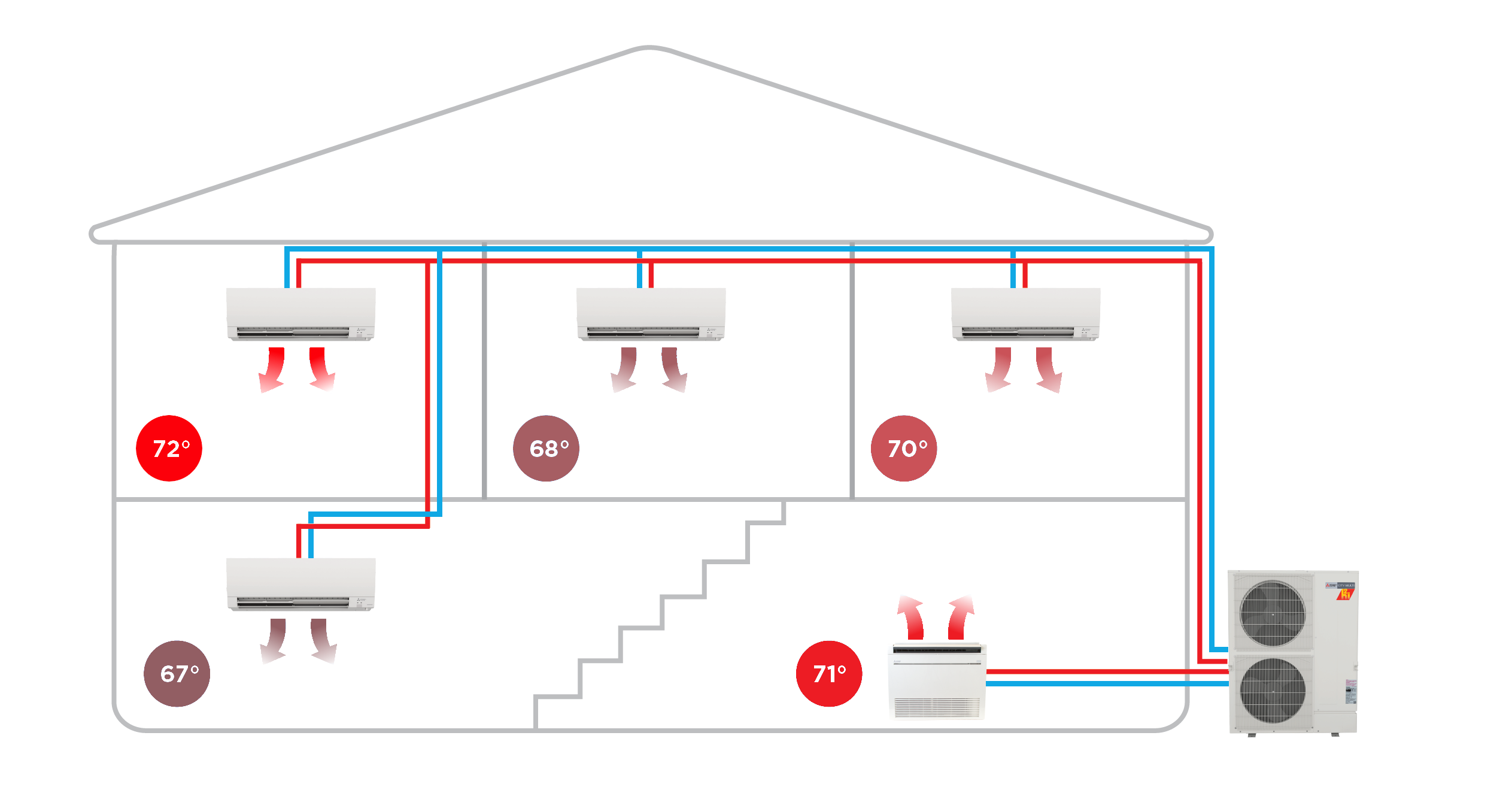
- Ductless: Ductless systems are often referred to as "mini-splits" and typically consist of one or more wall-mounted indoor units connected to an outdoor unit. The main advantages of ductless mini-splits are their small size and flexibility for zoning (heating and cooling individual rooms). Many models can have as many as 4+ indoor units (for four zones or rooms) connected to one outdoor unit.
The image below is of a ductless mini-split heat pump with one outdoor unit connected to multiple indoor heads. This allows different areas of the house to be set to different temperatures.
System Size and Output Capacity:
The amount of heating and cooling that a heat pump system can provide depends on its size, or "output capacity". Smaller heat pumps can be used to heat individual rooms or spaces. Larger, whole home systems may have multiple indoor units connected to one or more outdoor units. The output capacity of a heat pump system can vary depending on the outdoor temperature. The NEEP Cold-Climate Air Source Heat Pump List provides the output capacity at various outdoor temperatures down to at least 5 degrees F.
HSPF2:
The HSPF2 (Heating Seasonal Performance Factor) is the measure of an air source heat pump's average heating efficiency over an entire heating season. It indicates how many BTUs of heat the system produces for each watt-hour of electricity it consumes. For example, a heat pump with an HSPF2 of 9 will output an average of 9 BTUs of heat for every watt-hour of electricity used throughout the heating season. The higher the HSPF2, the more efficient the system — and the lower your annual heating bills.
SEER2:
This is the average annual cooling efficiency of the heat pump. The SEER2 rating indicates how much cold air is produced for each watt of electricity that the system consumes. A higher SEER2 rating will reduce your cooling costs over the cooling season.
EER2:
The EER2 rating is the cooling efficiency of the system when its specifically 95 degrees outside.
AHRI CERTIFICATE NUMBER:
AHRI stands for the Air-Conditioning, Heating, and Refrigeration Institute and is a third-party agency which provides an unbiased evaluation of the exact combination of indoor and outdoor units working together to determine the efficiency ratings and output capacity of a heat pump system. It is recommended to ensure any heat pump system you install has an accurate AHRI certificate. Your installer should be familiar with AHRI and be able to provide you with the certificate number upon request. A complete list of AHRI-certified heat pumps is available at ahridirectory.org.
In general, it is recommended to have a mini-split system cleaned once a year to every few years (depending on various factors such as whether you have carpets, pets, children, etc.) as these units can collect dust and mold. This is because mini-splits don't have an air filter like traditional HVAC systems. Instead, they have a screen that dust can get through which eventually coats the fan blades. It can cost $500-$600 to have a mini-split system cleaned, depending on number of indoor units, etc. (Source: "The Hidden Costs of Having a Mini-Split Heating and Air-Conditioning System" Boston Globe, 2/22/24).
Additional Resources for Proper Operation:
- How to Use your Ductless Heat Pump: Guidance from Efficiency Maine about the best practices for maintenance and upkeep of a heat pump.
- Who knew? 8 ways NOT to use a heat pump: Read this article from Efficiency Vermont for information on common misconceptions related to heat pump operation.
Northeast Energy Efficiency Partnership’s Air Source Heat Pump Buying Guide and MassCEC’s Heat Pump Guide are great resources to review to learn more about how air source heat pumps work, which design is right for your home, size and ducting options, and more!
YOUR NEXT STEPS
- Read this webpage to learn the basics.
- Get a free home energy audit (optional) - you'll receive an estimate on how much you would save on your heating (and cooling) costs if you let the auditor know you are interested in heat pumps.
- Review the financial incentives that you may qualify for.
- Get quotes for heat pumps from multiple installers (at least 3). Costs can vary by thousands of dollars. Be sure to send installers the system-specific eligibility requirements for any incentive you are interested in receiving. You can also consider asking an installer for two quotes - one quote for a whole-home heat pump system (capable of supplying 100% of your heat) and a 2nd quote for a smaller system, perhaps installed in the rooms you use the most.
- If applying for HG&E's Residential Energy Assistance Program or Whole-Home Heat Pump Program, apply before installation to confirm eligibility. If you are interested in HG&E's basic heat pump rebate ($250/ton up to $1,000) feel free to send us a copy of your quote before you have the system installed and we can check to see if it meets that program's eligibility requirements.